

Building Evolution
Before 1730, the house was extended with two return wings on the forecourt, depriving the Saint-Ninien Chapel of part of its forecourt. The north wing has a cellar (which does not connect to that of the main building) and features the same painted ceiling decorations as those on the ground floor of the main building. The angled entrance section avoids a pre-existing opening in the junction with the main building. This angled section is also found in the cellar, placing this articulation device in the period of the north wing’s construction. The south wing has neither a cellar nor painted decoration: it was clearly built at a later stage. The extension of the north wing beyond the footprint of its cellar suggests the north wing was modified when the south wing was built, to harmonise the ensemble.
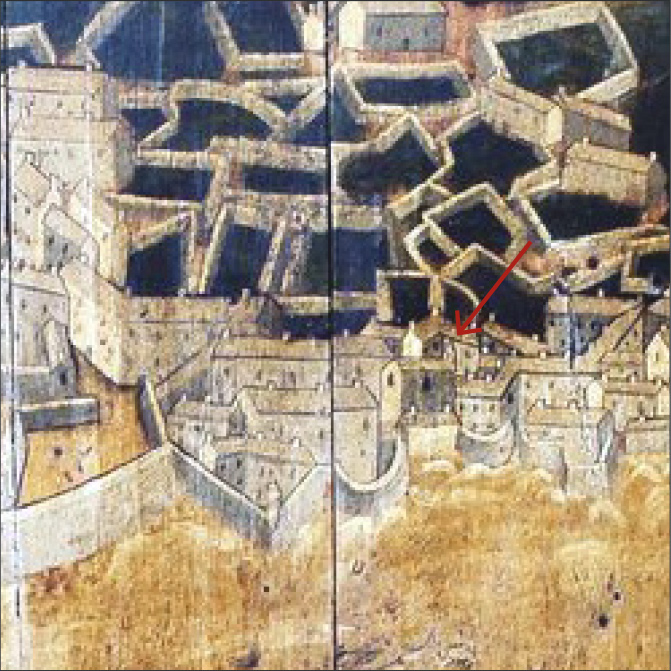
1730
The house has its two wings, as seen from 2 rue Armand Rousseau. Saint-Ninien Chapel is present.
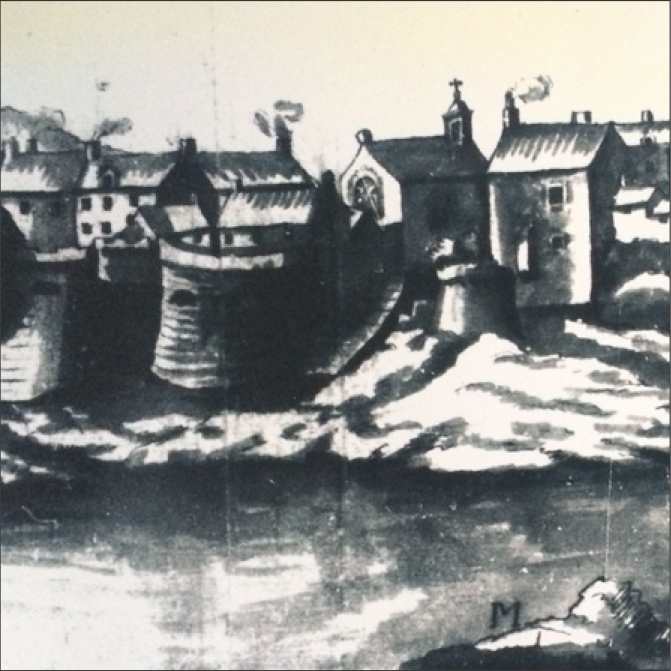
1776
House hidden by the Saint-Ninien Chapel.
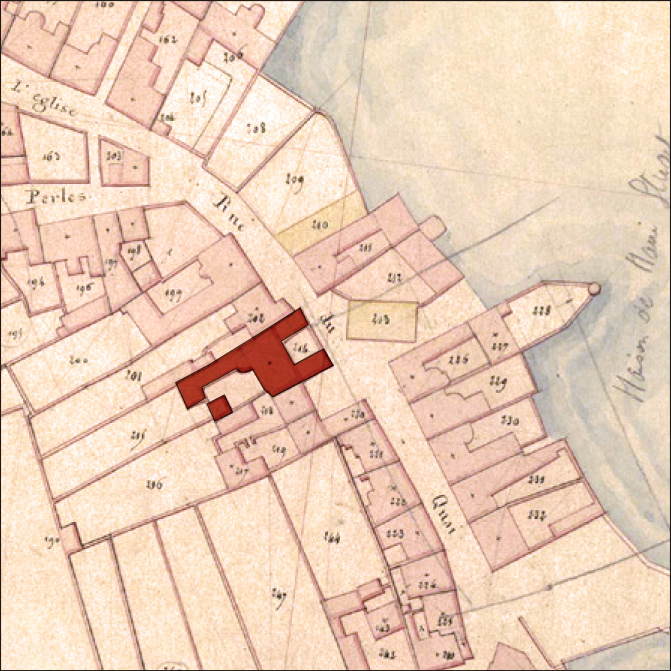
1846
The house has its two wings on the forecourt, its cellar, its stable with adjoining lodging, and its bread oven.
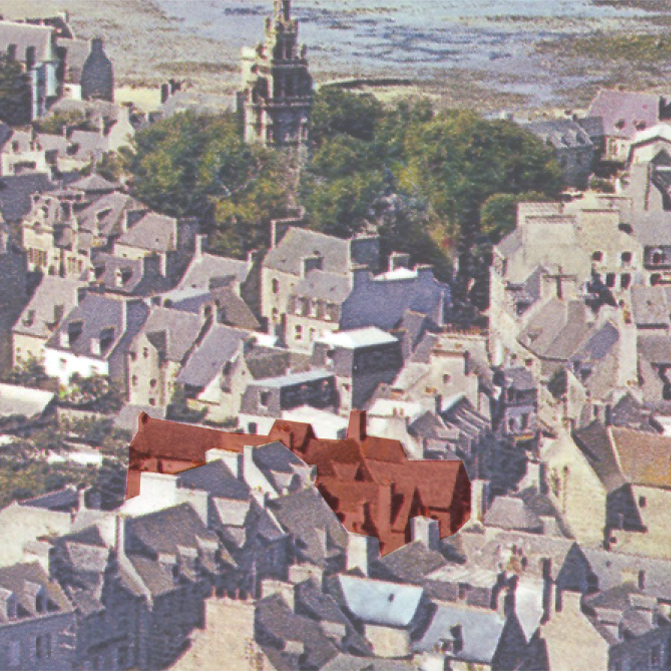
1960s
A slope facing the plot suggests the bread oven outbuilding still existed in the garden.
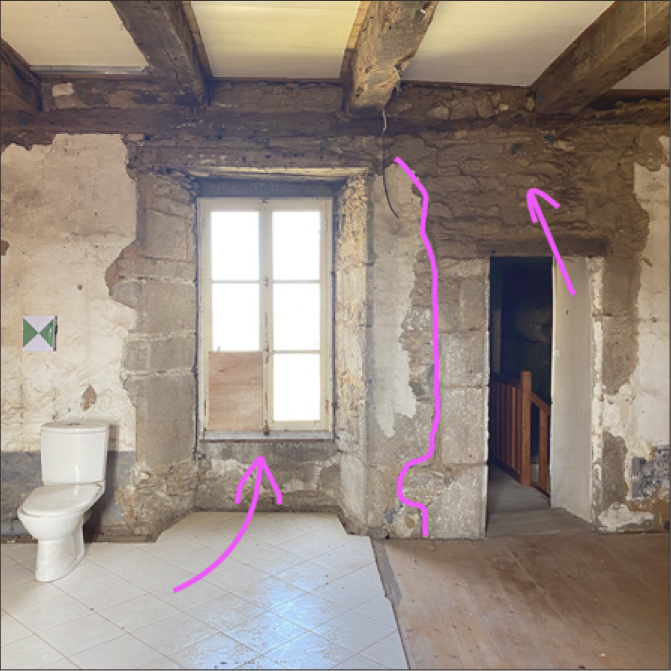
The extension of the two wings was not carried out in the same way at all.
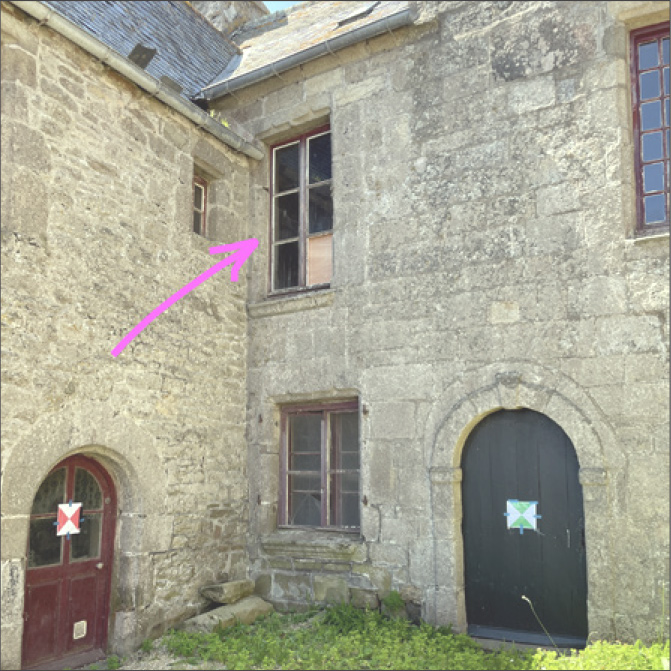
The extension of the two wings was not carried out in the same way at all.
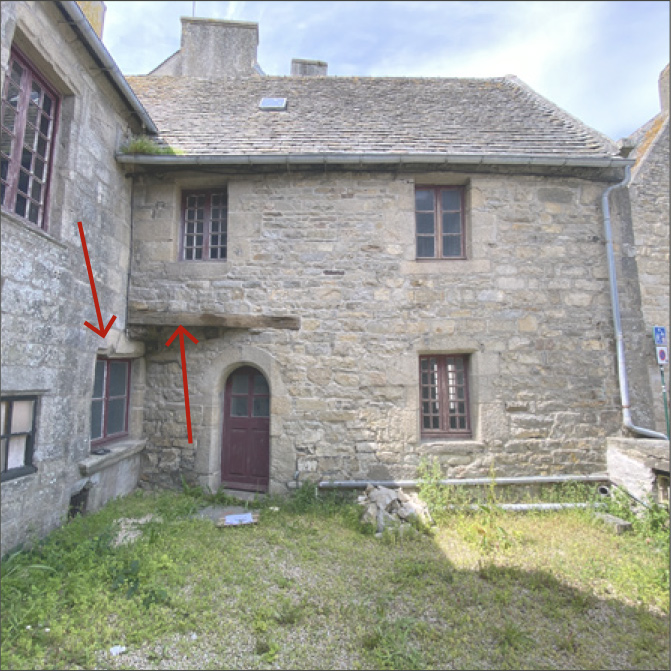
The extension of the two wings was not carried out in the same way at all.
To the south, a rough junction, without adaptation, unlike the north side.
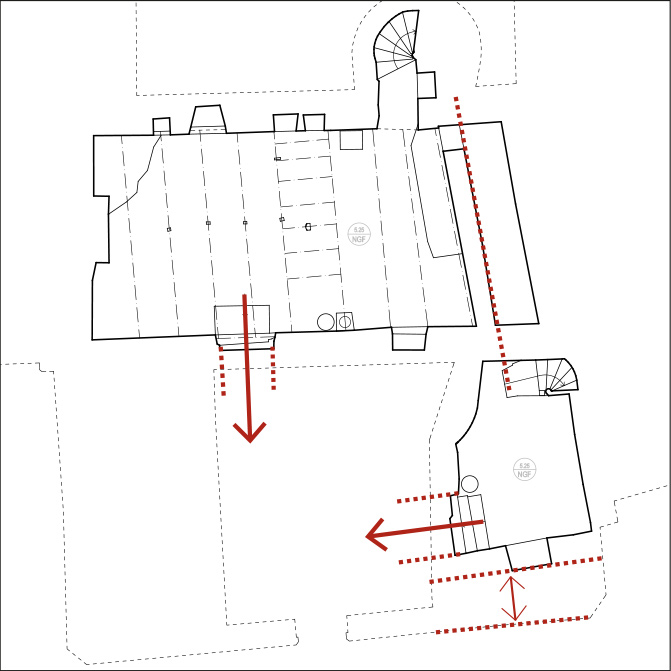
The two wings were not built at the same time: they are not the same width, and the north wing has a cellar whose footprint attests to its extension after initial construction. The north wing was very likely extended at the time the south wing was built, in the early 18th century (based on an old view and observation of remains).
Since the construction of the two return wings on the forecourt before 1730, the house has changed little in form. However, it has undergone significant losses, depriving it of its interior decoration through successive "renovations". It is likely that the house interiors were not included in the 1975 listing for these same reasons. Nevertheless, sumptuous decorative friezes survive on the high ceiling of the ground floor. During the 20th century, a lean-to connected the rear facade to the domestic quarters. The cellar and bread oven lean-to were demolished, causing the house to lose the axiality of the small central alleyway formed by the gaps between the two forecourt wings on the street side and the outbuildings on the garden side. This slender axis between sea and garden is typologically original.
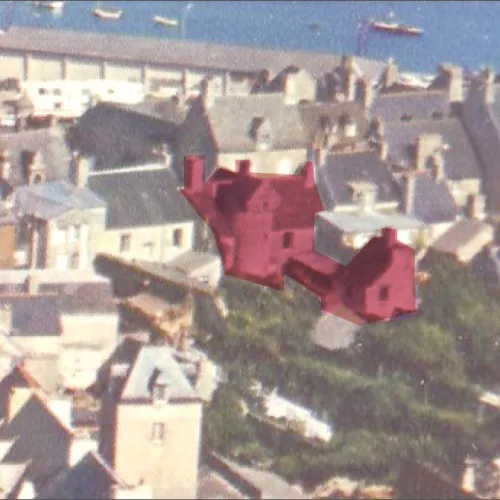
1960s
The house appears to retain the lean-to of its bread oven.
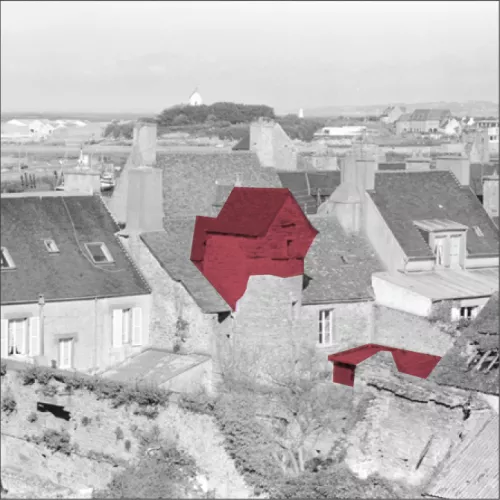
The extension of the projecting staircase as a dovecote dates either from the early 18th-century building campaign or from a 19th-century necessity.
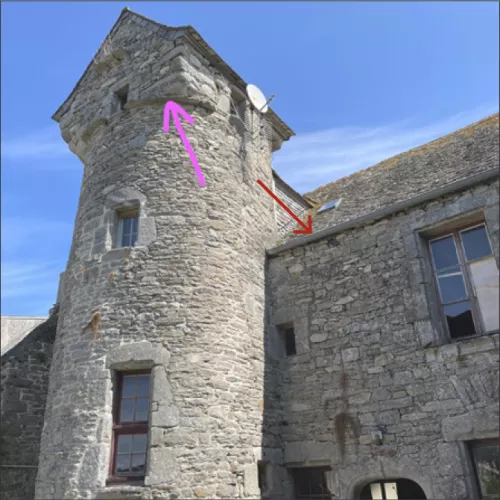
Pierres dite "d'envol", trompes d'encorbellement de facture rustique.
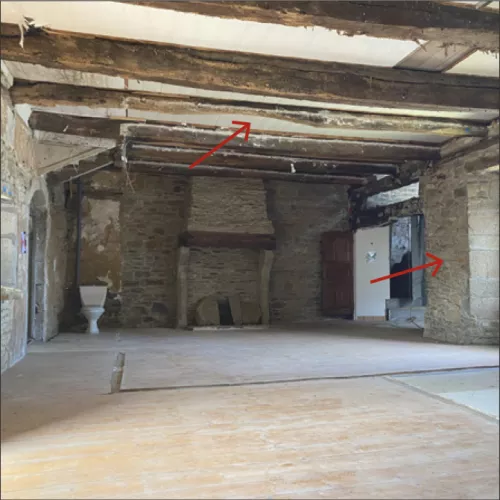
All interior decoration has been removed; no woodwork remains. Two historic fireplaces survive on the ground floor and first floor. Ultimately, it is perhaps the roof structure that retains the oldest elements.
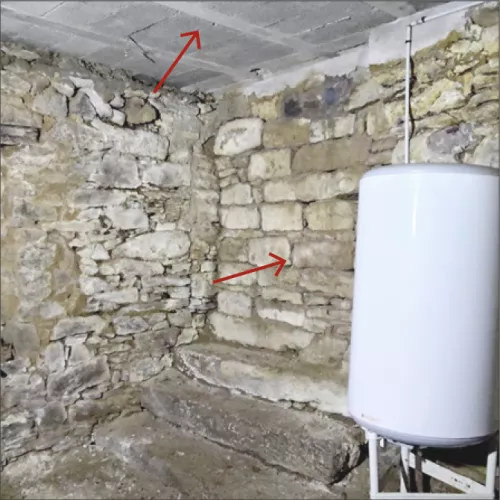
The ground floor of the north wing on the forecourt has been replaced with concrete beam-and-block flooring. The opening to the cellar has been bricked up. The staircase survives in its entirety.
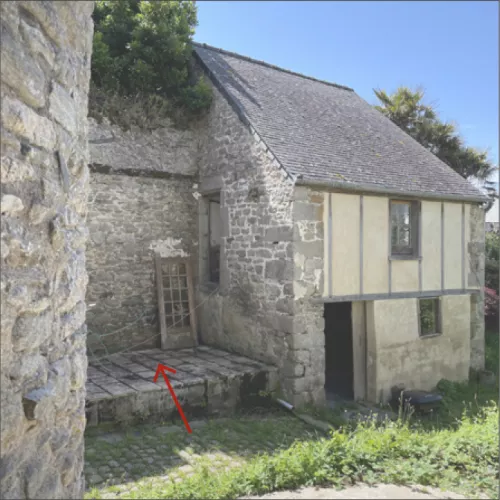
Stable and domestic quarters in an old lean-to with a modern eaves wall.
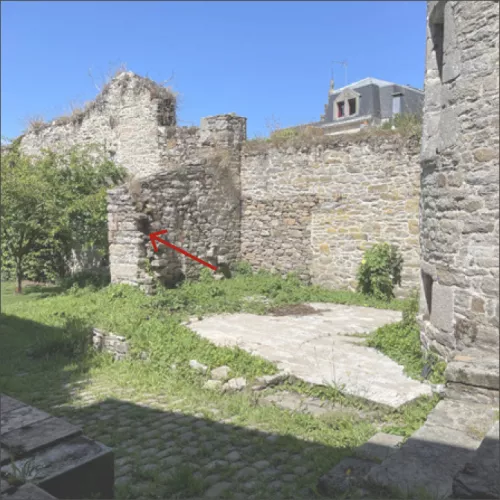
Cellar (directly adjoining the house) in a state of ruin.
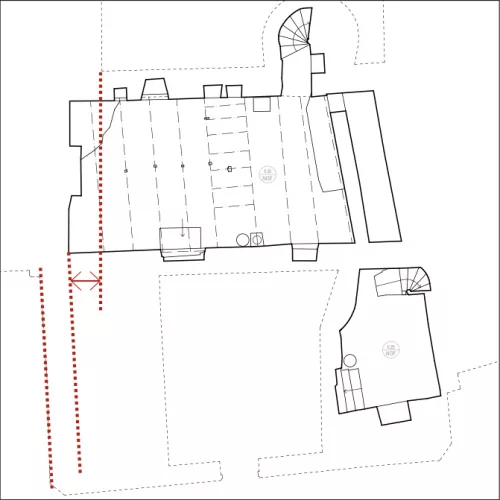
Extension of the house to the south given the two plot offsets and the need to preserve the main elevation.