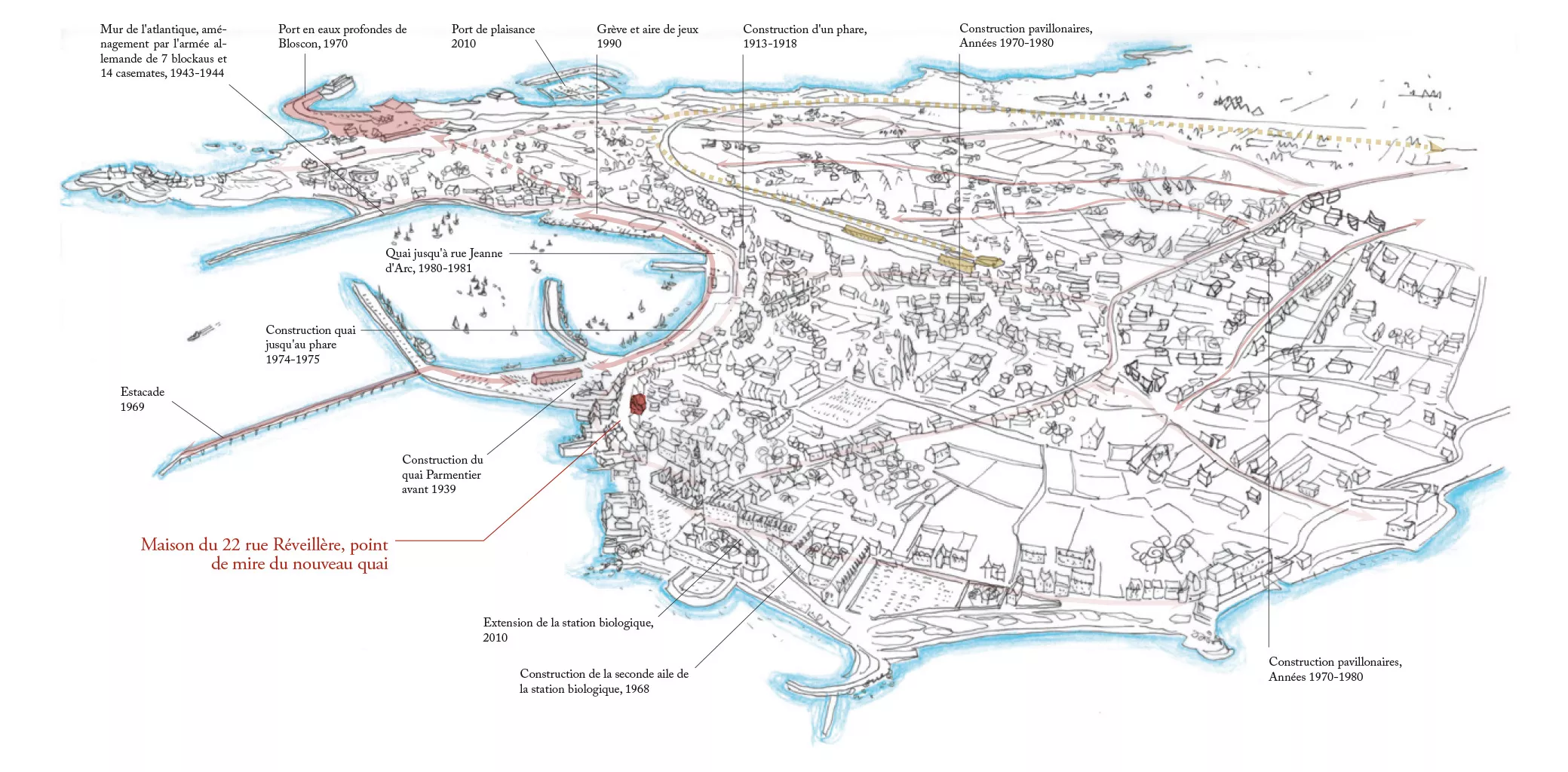
The Venue in History
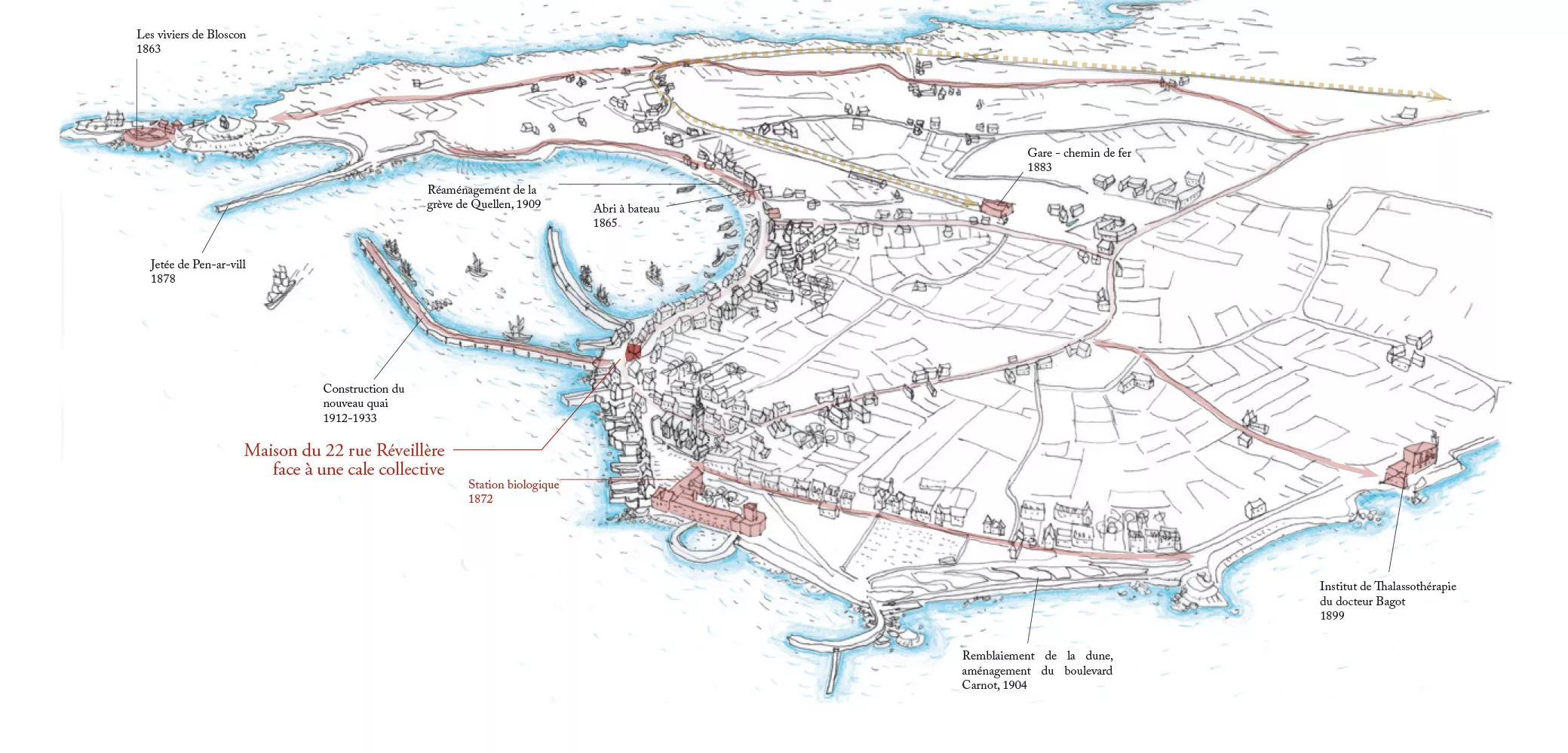
The main building at 22 rue Réveillère was set back from the alignment of a row of merchant houses built before 1545 on the landward side (the seaward plots were subdivided from 1560). This setback was due to the pre-existing Saint-Ninien Chapel (15th century) on the seafront, whose use likely required a forecourt to give air to its entrance — a kind of open-air gathering space in the medieval tradition. During the 17th century (before 1730), the house was extended with two return wings, splitting the former small square in two. Its northern section became the current house’s forecourt. The ruined chapel was demolished in 1932 to build a new quay, later extended with a land-fill platform in 1945, giving the house an important urban status as the focal point of a vista reclaimed from the sea.
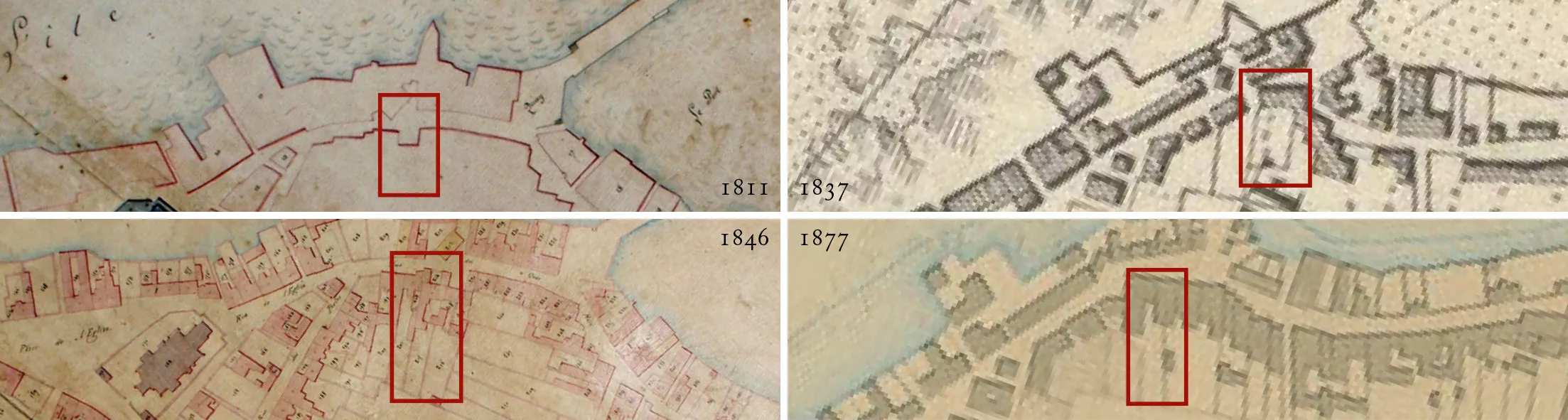
The main building was set back from the alignment to create a forecourt in front of the pre-existing Saint-Ninien Chapel.
The construction of the two wings probably divided this small square into two parts, privatizing the corresponding courtyard. Given the persistence of the same forms in the cadastral maps of 1811 and 1846, it is possible that the return wings were built at around that time.
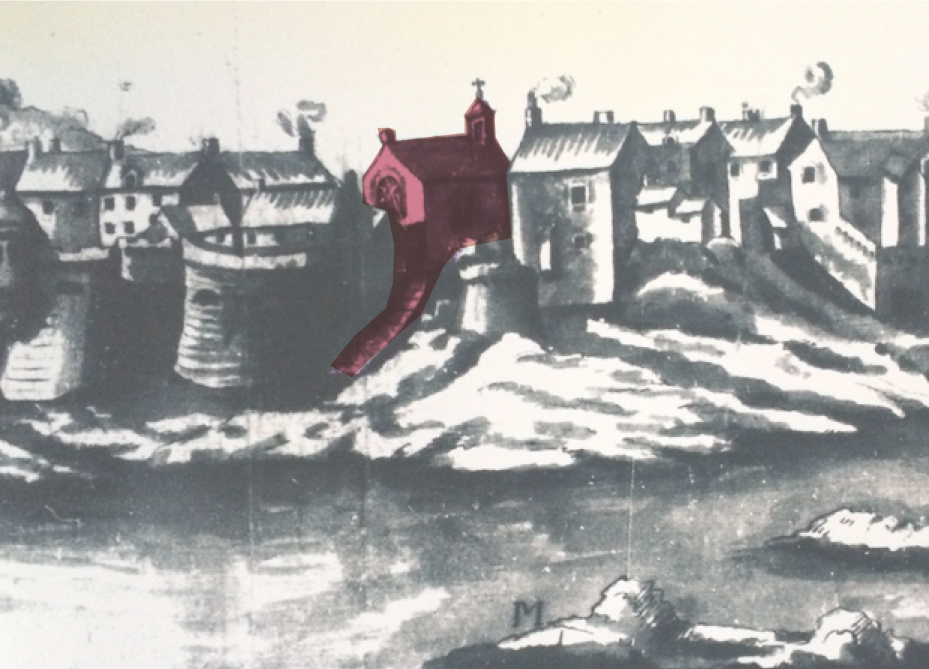
The Saint-Ninien Chapel and its slipway to the sea alongside the Lemoine house, known as "Marie Stuart".
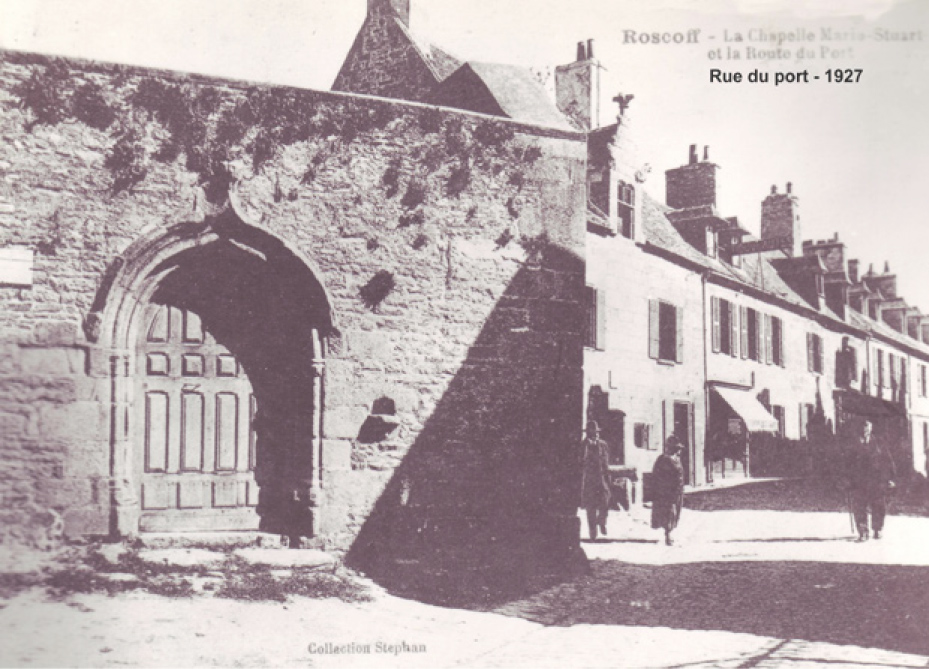
18th century: the Saint-Ninien Chapel, with its entrance door facing the former small square in front of 22 rue Réveillère.
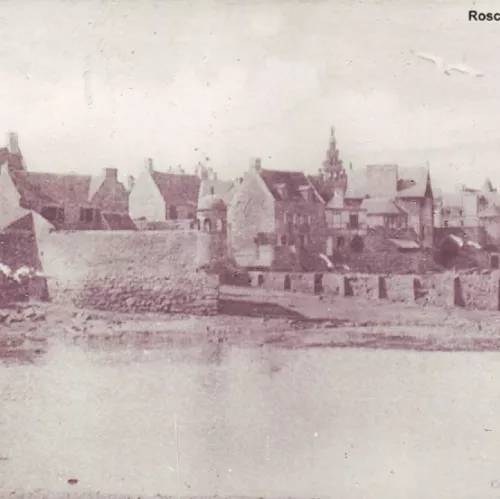
New quay completed in 1932.
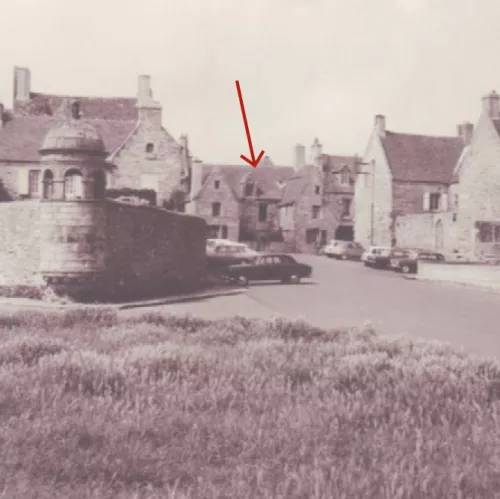
Land-fill platform of Quai Parmentier completed in 1945.
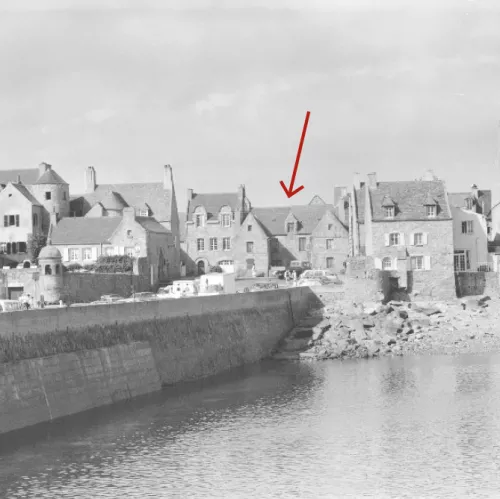
Since 1945, the house has been the focal point of a space reclaimed from the sea.
Facing the chapel and a slipway.
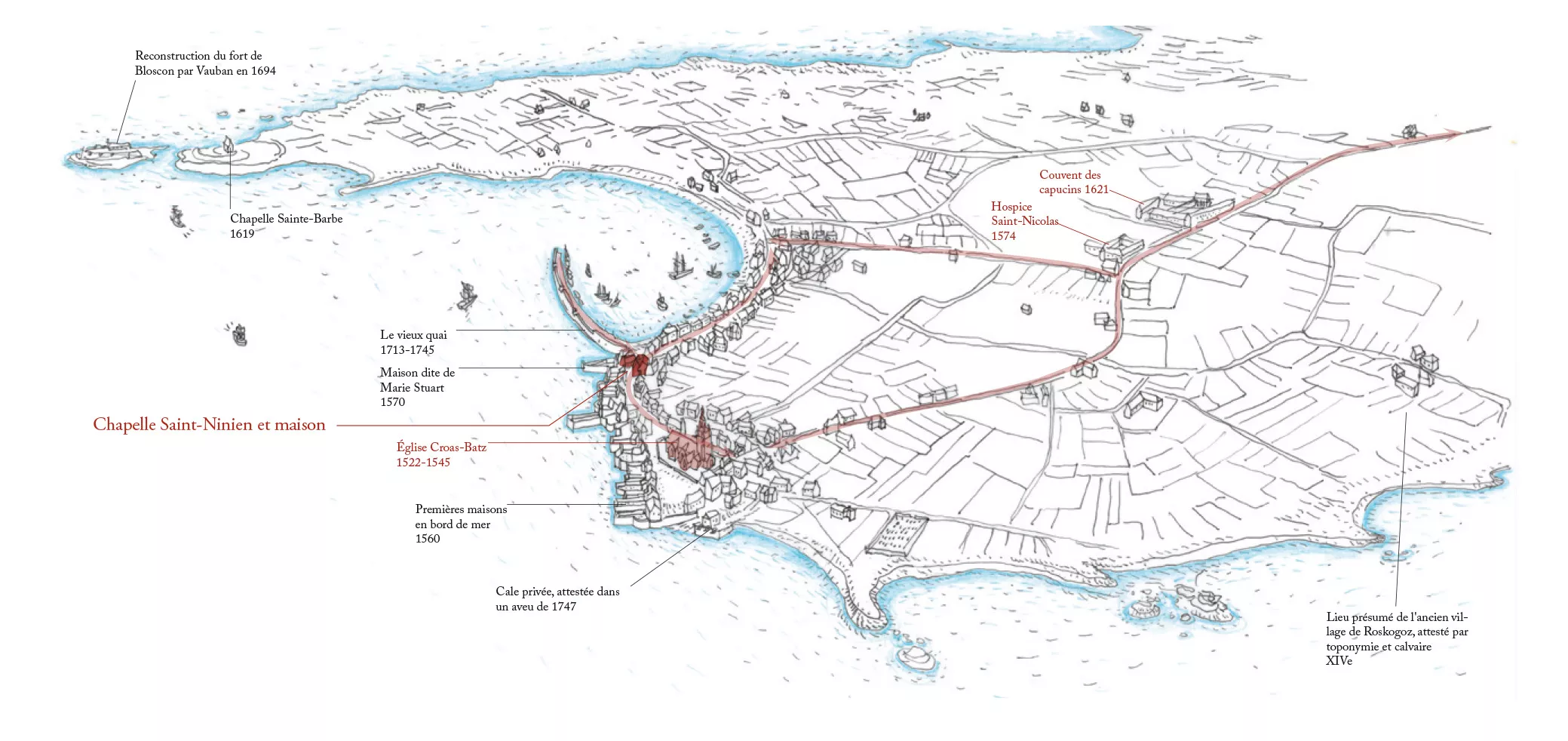
New quay along the slipway.
Land-fill platform of Quai Parmentier